Insights Update: AI-Powered Wearables Boost Daily Wellness
The wellness tech landscape in 2026 is marked by rapid advancements in AI-driven wearables that provide personalized health insights. From the soaring valuation of smart ring pioneer Oura to innovative EEG devices like Awear that offer continuous stress monitoring and AI coaching, these devices are moving beyond novelty to essential tools for everyday wellness.
The Rise of Smart Rings: Oura’s Mainstream Breakthrough
Smart rings have emerged as a front-runner in the AI-powered wearables category. The Oura smart ring exemplifies this trend, having secured a monumental $900 million funding round that propelled its valuation close to $11 billion in 2025. This influx of capital reflects a broader shift of smart rings from niche gadgets into widely adopted wellness devices.
Oura’s ring tracks sleep quality, heart rate variability, body temperature, and activity levels, leveraging AI to deliver actionable health insights. Its discreet form factor and comprehensive data collection have made it particularly appealing for users seeking non-intrusive yet detailed health monitoring. The company’s growth signals increasing consumer demand for compact wearables that integrate seamlessly with daily life.
EEG Wearables Revolutionizing Stress Management
While fitness and sleep remain wellness staples, stress management has become a critical focus. Enter the Awear wearable EEG device—a novel AI-powered tool that continuously monitors brain activity through electroencephalography (EEG) sensors worn discreetly behind the ear.
Developed by former telecom R&D lead Antonio Forenza, Awear tracks beta brain waves associated with psychological stress and delivers real-time AI coaching via its companion app. This proactive approach helps users intercept rising stress levels before they lead to adverse health outcomes, marking a significant leap from reactive to preventive wellness strategies.
Currently in early consumer access and backed by pre-seed investments from Techstars and Hustle Fund, Awear is gaining traction as a pioneering product in mental wellness wearables, with clinical collaborations underway to expand its applications.
Sweat-Reading AI Wearables: The Next Frontier in Needle-Free Health Monitoring
Beyond brain and body sensors, sweat analysis is emerging as a breakthrough in personalized health diagnostics. Recent research highlights AI-powered wearables capable of interpreting sweat biomarkers to detect early signs of diseases and metabolic imbalances before symptoms appear.
These devices utilize microfluidic sensors combined with machine learning algorithms to analyze sweat composition continuously and non-invasively. The technology holds promise for chronic disease management, hydration tracking, and even infection detection, positioning sweat-reading wearables as a vital tool in preventive health care.
Smartwatches Evolve with AI-Enhanced Health Tracking
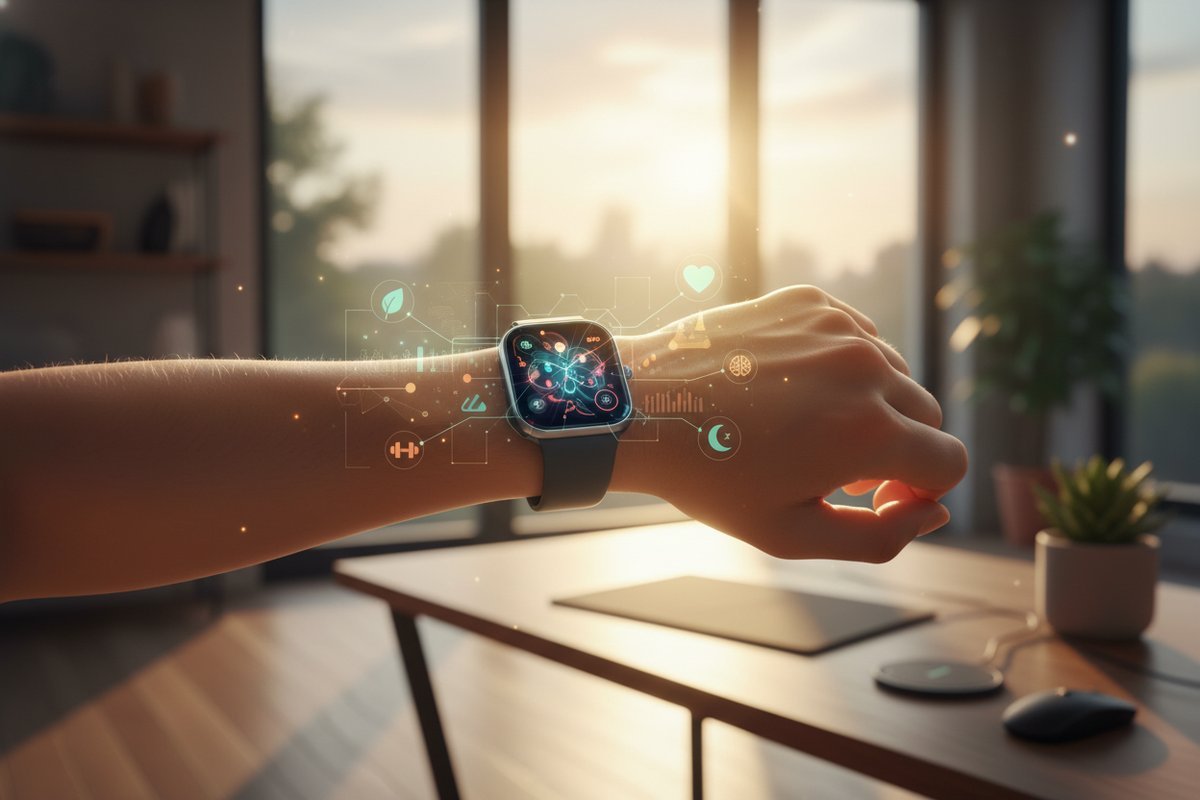
Smartwatches remain central to the wearables ecosystem, evolving rapidly with integrated AI features. Leading brands are pushing boundaries with advanced sensors that monitor ECG, blood oxygen, and even blood pressure, while AI algorithms personalize health insights and detect anomalies.
Additionally, seamless integration with smartphones and smart home devices enhances user convenience, making smartwatches indispensable for managing both health and daily tasks. Reviews, such as those by Forbes, highlight models that combine durability, style, and AI capabilities to cater to diverse lifestyles.
Industry Outlook: From Innovation to Integration
The wearable technology sector is expected to continue its strong growth trajectory in 2026, driven by AI advancements and increasing consumer demand for personalized wellness tools. Companies like Oura and Awear exemplify how innovative form factors and AI integration can elevate user engagement and health outcomes.
However, regulatory scrutiny and data privacy remain critical considerations as wearables collect increasingly sensitive health information. The balance between innovation and responsible data governance will shape the sector’s evolution, alongside potential partnerships with healthcare institutions to expand clinical applications.
What to Watch Next
Looking ahead, expect broader adoption of AI-powered wearables that move beyond fitness tracking toward holistic health management. Advances in sensor technology, especially in non-invasive diagnostics like sweat analysis, will unlock new monitoring capabilities. Moreover, the convergence of wearables with telehealth platforms and AI-driven coaching promises more accessible and personalized wellness solutions.
The ongoing maturation of the wearables market, underscored by significant investments and technological breakthroughs, indicates that these devices will become integral to everyday health routines, empowering users to take proactive control of their wellness.