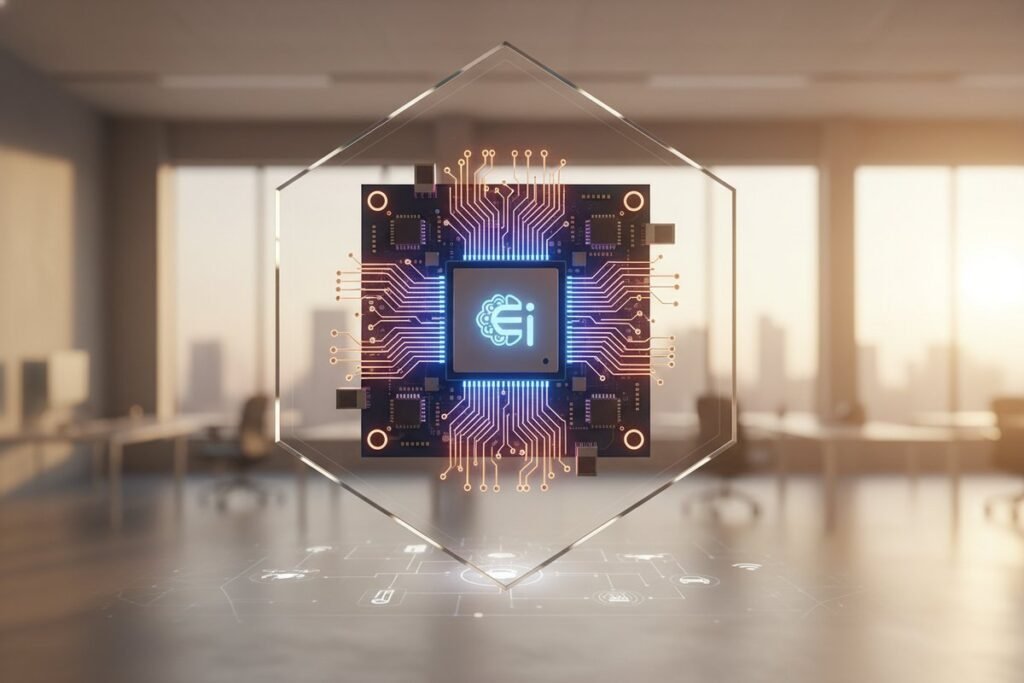
Edge AI Hardware Just Released: What It Means for IoT Devices
Understanding when edge AI hardware truly adds value is crucial. This article is not for those expecting instant miracles but for professionals seeking practical edge AI gains.
Latest Edge AI Hardware: Why It Matters Now
The recent launch of advanced edge AI chips and modules, spotlighted at CES 2026, signals a shift in how Internet of Things (IoT) devices process data. Unlike previous generations, these new components embed AI directly into devices, enabling real-time, local decision-making rather than relying heavily on cloud computing. This can significantly reduce latency and improve efficiency, which is critical for applications demanding immediate responses, such as smart vehicles and industrial automation.
For developers and tech professionals, the key takeaway is that integrating these hardware innovations can unlock smarter, faster IoT ecosystems. However, the benefits depend heavily on selecting the right hardware for the device’s intended use and understanding the trade-offs involved.
Common Mistakes When Adopting Edge AI Hardware
- Overestimating AI Capability: A frequent misstep is assuming all new edge AI chips offer the same intelligence level. In practice, some focus on speed and efficiency but lack sophisticated reasoning abilities, which can lead to unexpected errors in complex environments.
- Ignoring Integration Complexity: Another common issue is underestimating the challenge of integrating new AI modules into existing IoT systems. Compatibility problems can result in performance bottlenecks, negating any hardware advantages.
- Neglecting Power and Thermal Constraints: Edge AI hardware often demands more power and generates heat. Overlooking these factors can shorten device lifespan or require costly redesigns.
When Not to Use Edge AI Hardware
This approach is not suitable if your IoT device primarily functions in environments with reliable, high-speed cloud connectivity where offloading processing is simpler and more efficient. Similarly, if your application requires complex, large-scale AI models that exceed the processing capacity of current edge chips, relying solely on edge AI hardware may be counterproductive.
Edge AI hardware also struggles in scenarios where cost sensitivity is paramount, as newer AI modules can increase device production expenses significantly.
Before You Start: Edge AI Hardware Checklist
- ☐ Assess if real-time local processing will materially improve your device’s function.
- ☐ Verify compatibility of the new AI chip with your device’s existing hardware and software.
- ☐ Evaluate power consumption and thermal management requirements.
- ☐ Consider the trade-offs between on-device AI and cloud-based processing.
- ☐ Plan for software updates and maintenance to keep AI models relevant.
Trade-Offs to Consider with Edge AI Hardware
- Performance vs. Cost: Higher processing power typically means higher costs-not just for components but also for cooling and power solutions.
- Local Processing vs. Model Complexity: Edge AI chips handle simpler models well but might struggle with advanced AI, making cloud integration still necessary for some tasks.
- Speed vs. Development Time: Integrating cutting-edge hardware can extend development cycles due to new toolchains and testing requirements.
What This Means for You
As AI becomes an intrinsic part of everyday devices rather than an add-on, edge AI hardware offers a promising avenue to enhance IoT device autonomy and responsiveness. However, success hinges on making informed choices-balancing device needs, environmental constraints, and budget.
For those developing IoT ecosystems in sectors like automotive or smart manufacturing, embracing these hardware innovations can provide a competitive edge. Yet, a cautious, well-planned approach avoids the pitfalls that many encounter when rushing to adopt new AI solutions.
What to Watch Next
Keep an eye on how manufacturers refine edge AI chips to better support complex models at lower power levels. Also, monitor emerging middleware solutions that simplify integration and maintenance. These developments will shape practical adoption and influence which devices truly benefit from embedded AI.
In the meantime, prioritise thorough evaluation before upgrading your IoT hardware to the latest edge AI offerings.
This content is based on publicly available information, general industry patterns, and editorial analysis. It is intended for informational purposes and does not replace professional or local advice.
FAQ
When should I choose edge AI hardware over cloud processing for my IoT device?
Edge AI hardware is preferable if your device requires real-time responses without latency, operates in environments with unreliable connectivity, or needs to reduce dependence on cloud services.