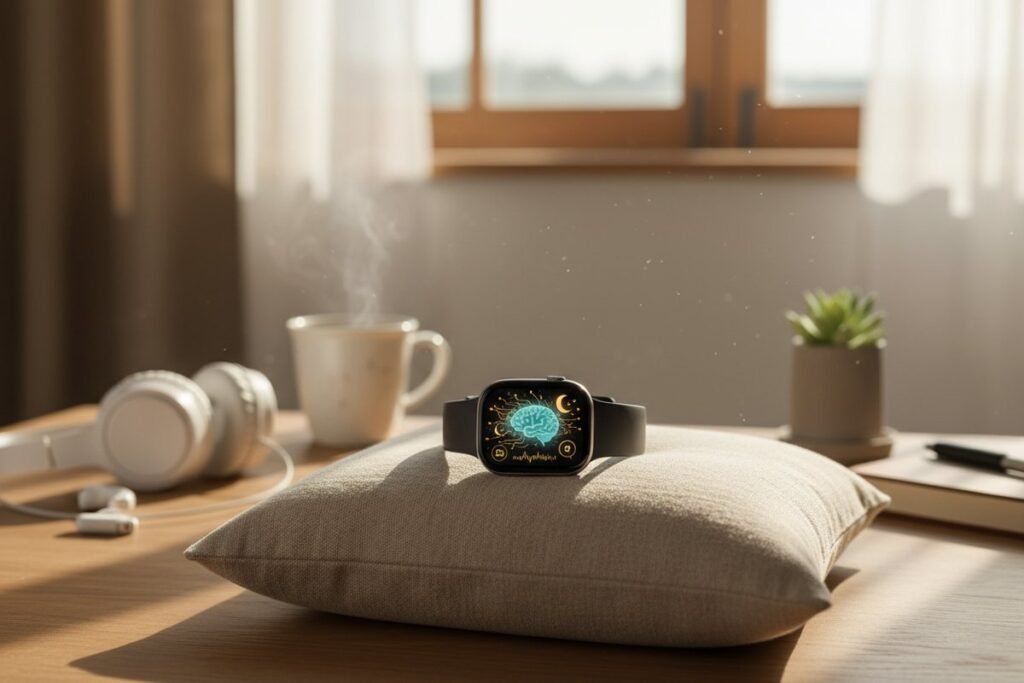
New Smartwatch Update Focuses on Mental Wellness and Sleep Tracking
Understanding how AI-driven mental health and sleep tracking differ can save you time and money. However, if you prefer simpler devices or aren’t focused on wellness tech, this update may not add value.
What’s New in AI-Driven Mental Wellness and Sleep Tracking?
The recent smartwatch update introduces AI-powered mental wellness tools alongside enhanced sleep tracking. Unlike earlier versions that offered generic stress indicators or basic sleep phase data, this update applies more advanced AI algorithms to interpret users’ physiological and behavioural data in a personalised way.
In practice, this often leads to more nuanced insights, such as detecting subtle mood shifts, offering tailored mindfulness prompts, or highlighting sleep disruptions that might otherwise go unnoticed. These AI features aim to integrate mental health management seamlessly into daily routines, supporting users in recognising patterns and making informed lifestyle adjustments.
While some smartwatches have added AI features recently, this update stands out by combining mental wellness with sleep analytics in an integrated system, reflecting a broader trend observed at CES 2026 where AI’s role in personal wellbeing is gaining traction.
Common Mistakes When Choosing Smartwatch Wellness Features
- Assuming More Data Means Better Help: Many users believe extensive data collection automatically improves wellness. However, without AI to interpret this data meaningfully, it often leads to confusion rather than clarity.
- Overlooking AI’s Role in Contextualising Data: Basic trackers might show heart rate variability or sleep duration but fail to relate these to mental health trends. The new AI update addresses this by drawing connections that earlier models miss.
- Expecting Instant Fixes: Users sometimes expect AI-driven insights to replace professional advice or instantly solve mental health issues. In reality, these tools are aids for awareness and self-management rather than cures.
When Not to Opt for This AI-Enhanced Smartwatch
- If You Prefer Minimalist Devices: This update adds complexity that might overwhelm users seeking straightforward fitness tracking.
- When Professional Mental Health Support Is Needed: If mental health challenges require clinical attention, relying solely on wearable AI features could delay necessary care.
Before-You-Start Checklist for Using AI Mental Wellness and Sleep Features
- ☐ Ensure your daily routine allows for consistent wearable use to collect reliable data.
- ☐ Familiarise yourself with the smartwatch app’s privacy settings to control personal data sharing.
- ☐ Set realistic goals for mental wellness improvements, recognising AI insights are guides, not diagnoses.
- ☐ Prepare to engage actively with prompts or recommendations rather than passively viewing data.
- ☐ Keep a journal or notes to track how AI feedback aligns with your subjective feelings over time.
Trade-Offs to Consider with AI-Driven Wellness Updates
- Privacy vs Personalisation: AI needs access to sensitive physiological and behavioural data to offer tailored advice, raising privacy considerations.
- Battery Life Impact: Advanced AI features may consume more power, reducing smartwatch battery duration between charges.
- Learning Curve: Users unfamiliar with AI wellness tools might find the interface or insights initially confusing or overwhelming.
What This Means for You
If your focus is on proactive mental health management and improving sleep quality through smart technology, this AI update offers practical advantages over previous smartwatch models. It reflects a growing trend in consumer tech where AI not only gathers data but contextualises it to support behavioural change.
However, this sophistication comes with trade-offs in complexity, privacy, and battery demands. Evaluating your personal needs and willingness to engage with AI-driven insights is key before adopting this latest update.
What to Watch Next
As AI continues to evolve within wearables, future updates might better integrate with other smart home or health devices, creating a more holistic wellbeing ecosystem. Keeping an eye on developments from major tech events like CES can help you identify meaningful innovations rather than incremental upgrades.
For now, the focus remains on whether users can effectively leverage AI’s interpretive power in daily mental health and sleep management – making informed choices about when and how to use these tools crucial.
This content is based on publicly available information, general industry patterns, and editorial analysis. It is intended for informational purposes and does not replace professional or local advice.
FAQ
Should I rely solely on AI smartwatch features for mental health support?
AI features can raise awareness and help self-manage mental wellness, but they are not a substitute for professional mental health care when needed.