5 AI Tech Trends Reshaping Smart Living
As AI innovation accelerates in 2026, emerging technologies like agentic AI, digital twins, neuromorphic computing, and ambient intelligence are revolutionizing smart homes, healthcare, and urban infrastructure. These trends promise seamless integration and adaptive experiences, forging the path toward a truly intelligent lifestyle.
Introduction: The AI-Driven Evolution of Smart Living
Smart living has transcended basic automation to embrace deeply intelligent systems that anticipate needs, personalize experiences, and optimize resource use. Thanks to breakthroughs in artificial intelligence, our homes, cities, and personal devices are becoming increasingly interconnected and adaptive. This evolution is not only enhancing convenience but also sustainability and wellbeing. In 2026, several AI technologies stand out as key drivers shaping this landscape.
1. Agentic AI: Autonomous Decision-Making for Daily Life
Agentic AI represents a new generation of autonomous systems capable of independent reasoning and proactive problem-solving. Unlike traditional AI assistants that react to commands, agentic AI can initiate tasks, learn from complex environments, and make decisions on behalf of users. For example, Anthropic and Amazon’s AI agents are pioneering these self-directed agents, which are beginning to manage household energy, schedule healthcare appointments, and optimize smart device interactions without constant user input. This shift enhances efficiency and creates a more seamless, hassle-free tech lifestyle.
2. Digital Twins: Virtual Mirrors for Real-World Optimization
Digital twins are real-time virtual replicas of physical objects, environments, or even entire communities, powered by AI and IoT data. By simulating real-world conditions, digital twins enable precise monitoring, predictive maintenance, and scenario testing. In smart living, this means homes and cities can be optimized for energy consumption, safety, and comfort. Leading technology firms like IBM and Microsoft are advancing digital twin platforms that help urban planners and homeowners alike create responsive environments that adapt dynamically to occupants’ habits and external conditions.
3. Neuromorphic Computing: Brain-Inspired AI for Smarter Devices
Neuromorphic computing mimics the architecture and functioning of the human brain to achieve highly efficient, low-power AI processing. This innovation is pivotal for smart living devices that require real-time cognition without draining power or relying heavily on cloud connectivity. Companies like Intel are at the forefront of this technology, enabling smarter sensors, wearable health monitors, and home automation systems that operate faster and more intuitively. This results in devices that respond instantly to environmental changes and user needs, boosting both performance and user experience.
4. Ambient Intelligence: Invisible AI Enhancing Everyday Environments
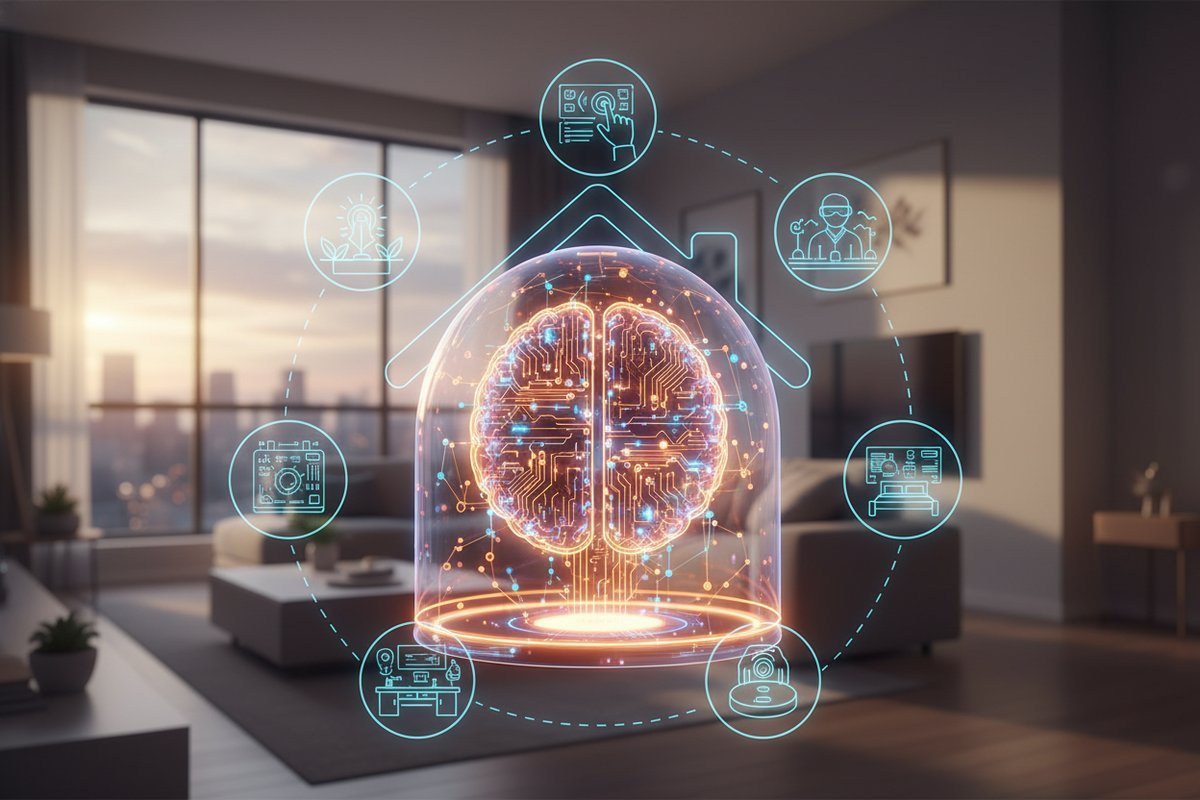
Ambient intelligence integrates AI seamlessly into the environment, creating spaces that are context-aware and responsive without explicit commands. This technology leverages sensor networks, natural language processing, and machine learning to anticipate needs and provide support unobtrusively. For instance, smart homes equipped with ambient intelligence can adjust lighting and climate based on mood or activity, remind users of tasks, or even detect health anomalies early. Qualcomm and other tech innovators are developing chipsets and platforms that facilitate ambient intelligence, making smart living spaces more intuitive and empathetic.
5. AI in Healthcare and Smart Infrastructure: Building Tomorrow’s Wellbeing
By 2026, AI-driven healthcare solutions and smart infrastructure are converging to support healthier, more sustainable living environments. AI-powered diagnostics, personalized treatment plans, and remote patient monitoring are becoming mainstream, enhancing both accessibility and outcomes. Simultaneously, smart infrastructure—powered by AI analytics and digital twins—is optimizing energy grids, traffic flow, and public safety. IBM Watson Health exemplifies AI’s role in transforming healthcare, while urban AI platforms are reshaping how cities function for residents’ benefit. Together, these advances promise integrated ecosystems that promote longevity and quality of life.
Future Predictions: What to Expect Beyond 2026
Looking ahead, AI technologies will increasingly blur the lines between physical and digital realities, fostering hyper-personalized experiences and smarter resource management. Agentic AI will evolve with enhanced autonomy and ethical frameworks, while digital twins could extend to entire supply chains and ecosystems. Neuromorphic chips are expected to power next-gen AI hardware, enabling pervasive intelligence in everyday objects. Ambient intelligence will mature into fully immersive environments, anticipating needs before they arise. Finally, AI’s integration with healthcare and infrastructure will create resilient, adaptive cities that support sustainable living at scale.
What Readers Should Watch For
To stay informed and leverage these trends, watch for advancements from leading AI research labs and companies such as Anthropic, IBM, Microsoft, Intel, and Qualcomm. Stay engaged with emerging standards for AI ethics and interoperability to ensure safe and inclusive adoption. Finally, explore smart devices and platforms that incorporate these technologies to experience firsthand the benefits of AI-driven smart living.
In summary, the rapid pace of AI innovation is reshaping smart living in profound ways. By understanding and embracing agentic AI, digital twins, neuromorphic computing, ambient intelligence, and AI-powered healthcare and infrastructure, individuals and communities can look forward to a more connected, efficient, and personalized future.