5 AI Lifestyle Trends Shaping Tomorrow
As we step deeper into 2026, artificial intelligence continues to redefine daily life and business operations. From automated personal agents to immersive digital twins, AI innovations are making lifestyles smarter, more sustainable, and increasingly interconnected. This article explores five key AI lifestyle trends shaping tomorrow’s world, emphasizing practical benefits and mindful use to harness AI’s full potential.
1. Agentic AI: Automating Everyday Tasks
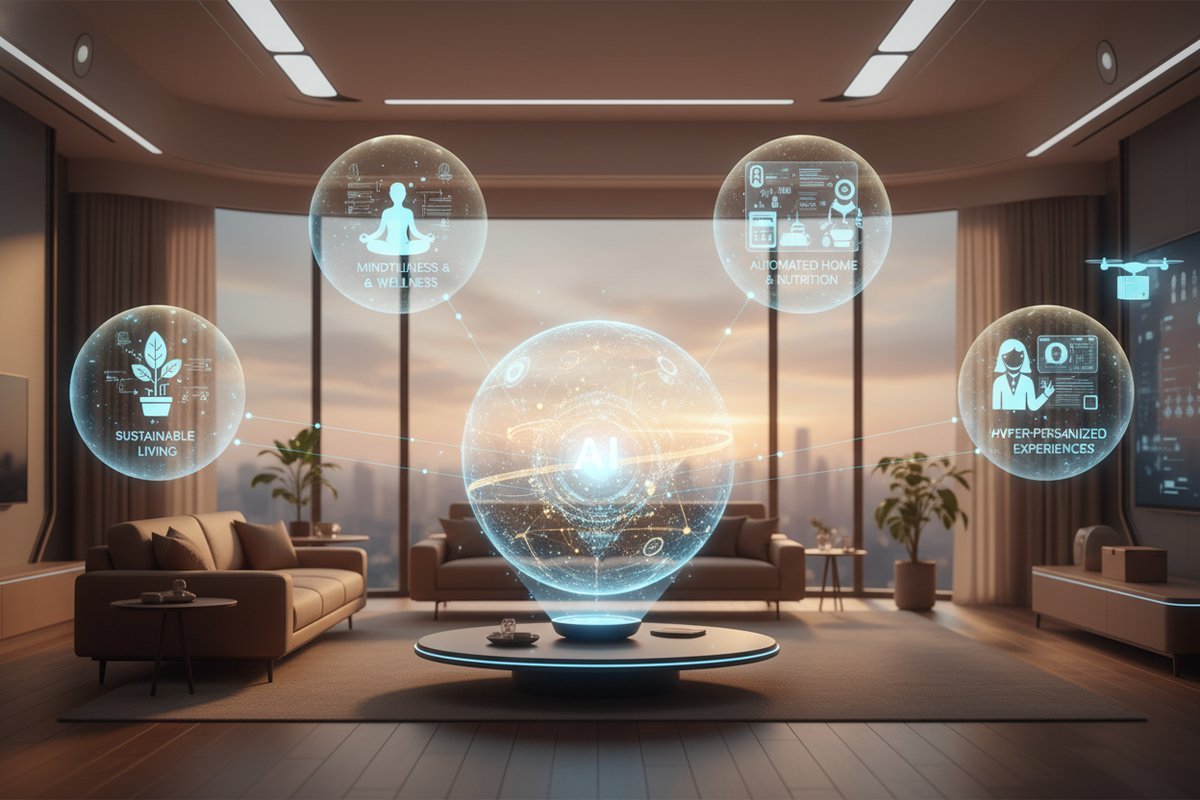
One of the most transformative AI lifestyle trends is the rise of agentic AI—intelligent agents capable of autonomously managing complex tasks across personal and professional domains. Unlike traditional AI that passively supports users, agentic AI actively plans, executes, and adapts workflows, freeing humans from repetitive chores.
For example, AI-powered virtual assistants now coordinate calendars, handle communications, and even optimize purchasing decisions based on real-time preferences and environmental factors. Enterprises leverage these agents to streamline operations, boosting business efficiency and responsiveness. Leading AI technology providers are expanding these capabilities, making agentic AI accessible beyond tech giants to small and medium businesses, fostering AI democratization.
This trend is supported by advances in natural language processing, contextual understanding, and reinforcement learning, enabling AI agents to make informed decisions and improve over time. As a result, users benefit from personalized, proactive AI aides that anticipate needs and simplify daily living.
2. AI Democratization Driving Business Efficiency
AI democratization refers to the broader availability and adoption of AI technologies across industries and organizational sizes. In 2026, this trend continues to accelerate, powered by cloud-based AI platforms, user-friendly interfaces, and pre-built AI models that lower barriers to entry.
Businesses no longer require extensive AI expertise or infrastructure to integrate AI solutions. Tools from leading AI cloud providers offer plug-and-play modules for data analysis, customer engagement, and process automation. This widespread adoption enables companies to optimize workflows, reduce costs, and enhance decision-making agility.
The democratization trend also empowers individuals by embedding AI into everyday devices and applications, from smart home assistants to personalized health trackers. This ubiquity fosters a smarter lifestyle ecosystem, where AI augments human capabilities seamlessly and inclusively.
3. Physical AI: Blending Intelligence with the Tangible World
Physical AI represents the integration of artificial intelligence into tangible, real-world systems such as robotics, smart appliances, and IoT devices. This trend is driving smarter environments—from homes and workplaces to urban infrastructure.
Robotic assistants equipped with AI can perform household chores, support elder care, or assist in complex manufacturing tasks. Smart appliances learn user habits to optimize energy use and maintenance schedules autonomously. Cities deploy AI-enabled sensors and actuators to manage traffic flows, enhance public safety, and promote sustainability.
The convergence of AI with robotics and IoT is fostering environments that adapt dynamically to human needs, improving quality of life while minimizing resource consumption. Companies pioneering in this space deliver solutions that combine AI software with innovative hardware, making physical AI a cornerstone of future smart living.
4. Digital Twins: Virtual Mirrors for Smarter Living
Digital twins are detailed virtual replicas of physical systems, assets, or even entire environments. In 2026, the use of AI-enhanced digital twins is expanding beyond industry into lifestyle applications.
Individuals can now create digital twins of their homes or health profiles, enabling continuous monitoring, simulation, and optimization. For example, a digital twin of a home can predict maintenance needs, optimize energy usage, and simulate renovations before physical changes occur.
On a broader scale, urban planners use digital twins of cities to model traffic, environmental impacts, and infrastructure projects with AI-driven insights, leading to more sustainable and efficient urban living. This trend leverages AI’s predictive capabilities to bridge physical and digital realms, empowering proactive and personalized decision-making.
5. Mindful AI Use: Navigating Risks for Sustainable Integration
As AI becomes deeply embedded in daily life, mindful and ethical use is increasingly critical. The future of AI lifestyle trends involves balancing innovation with responsible management of risks such as data privacy, algorithmic bias, and over-reliance on automation.
Stakeholders—including developers, businesses, and end-users—are adopting frameworks and tools to ensure transparency, fairness, and security in AI applications. Regulatory bodies worldwide are crafting guidelines to govern AI deployment, emphasizing accountability and human oversight.
This mindful approach is essential to maintaining trust and maximizing AI’s benefits sustainably. It encourages users to remain informed and proactive about how AI technologies impact their lives and communities.
Future Outlook: AI Lifestyle Trends to Watch
Looking ahead, AI innovations will increasingly merge with other emerging technologies like augmented reality (AR), edge computing, and 5G connectivity, enhancing AI’s responsiveness and immersion in everyday contexts. The proliferation of agentic AI and digital twins will redefine personal and enterprise productivity, while physical AI will continue to transform tangible environments.
However, the pace and scope of AI adoption will depend on continued efforts to democratize access and implement ethical safeguards. For those embracing these trends, staying informed through official channels like Krungsri Research and AI technology providers will be vital.
Conclusion
In 2026, AI lifestyle trends are shaping a smarter, more connected tomorrow. From agentic AI automating tasks to digital twins enabling virtual experimentation, these innovations promise significant gains in efficiency and quality of life. Yet, mindful AI use remains paramount to navigate challenges and ensure AI’s transformative power benefits all.
By understanding and engaging with these trends, readers can prepare for an AI-empowered future that harmonizes technology with human values and needs.
Explore more about AI innovations and tech lifestyle trends at leading research and technology platforms such as Krungsri Research and industry leaders advancing AI democratization and physical AI solutions.